
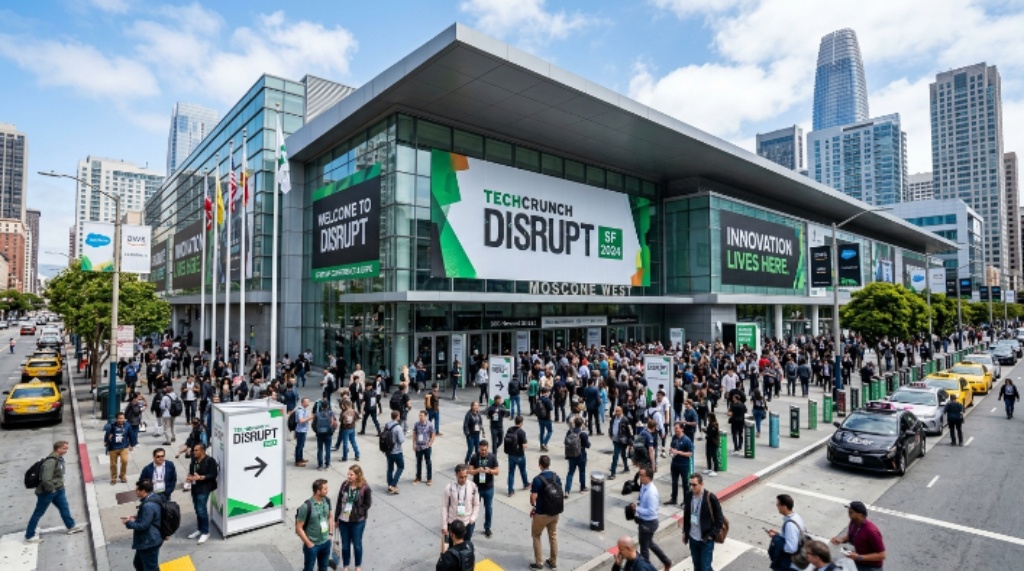
Every fall, the startup world turns its attention to San Francisco. Founders pack their bags, investors clear their calendars, and thousands of tech workers head to Moscone West for three packed days of pitches, panels, and product news. This year’s event runs October 13 to 15, 2026, and it promises to be one of the biggest editions yet. Below is a full guide covering when it happens, how much it costs, who is speaking, what the agenda looks like, and how startups can get involved.
When and Where It Takes Place
The event lands at Moscone West in downtown San Francisco from Tuesday, October 13 through Thursday, October 15, 2026. Organizers expect roughly 10,000 founders, investors, operators, and press to attend across the three days. The venue sits close to public transit, hotels, and restaurants, so getting around the city between sessions is easy. Because the schedule spans six stages running in parallel, attendees should plan their days ahead of time rather than wandering in without a plan.
The three-day format follows a familiar rhythm. The first day generally opens with keynotes and early-stage pitch rounds. The middle day tends to carry the heaviest lineup of panels and fireside chats. The final day wraps up with awards, closing remarks, and the last wave of networking. However, exact session placement can shift slightly as the full schedule gets finalized closer to the event, so it helps to check the official agenda page in the weeks before arrival.
Ticket Types and Pricing
Passes are typically split into a few categories, and prices rise the longer someone waits to register. Early registrants have historically saved several hundred dollars compared with those who buy at the door. Group and community passes also offer discounts for teams attending together. The table below outlines the general pass structure buyers can expect.
| Pass Type | Best For | Typical Savings Window |
| Super Early Bird | Budget-conscious early planners | Lowest price, available first |
| Early Bird | Founders and investors booking ahead | Moderate discount before rates climb |
| Standard / Regular | Attendees registering closer to the event | Full listed price |
| Founder Pass | Startup founders seeking funding access | Includes founder-focused perks |
| Investor Pass | VCs and angel investors | Curated deal-flow access |
| Group / Community Pass | Teams of three or more | Up to 30 percent off per seat |
Discounts of up to several hundred dollars have been offered during the earliest registration windows, along with limited-time bonus offers such as a discounted plus-one pass for the first wave of buyers. Because pricing tends to increase in stages rather than all at once, locking in a pass sooner rather than later is usually the smarter financial move for anyone who already knows they plan to attend.
Who Is Speaking
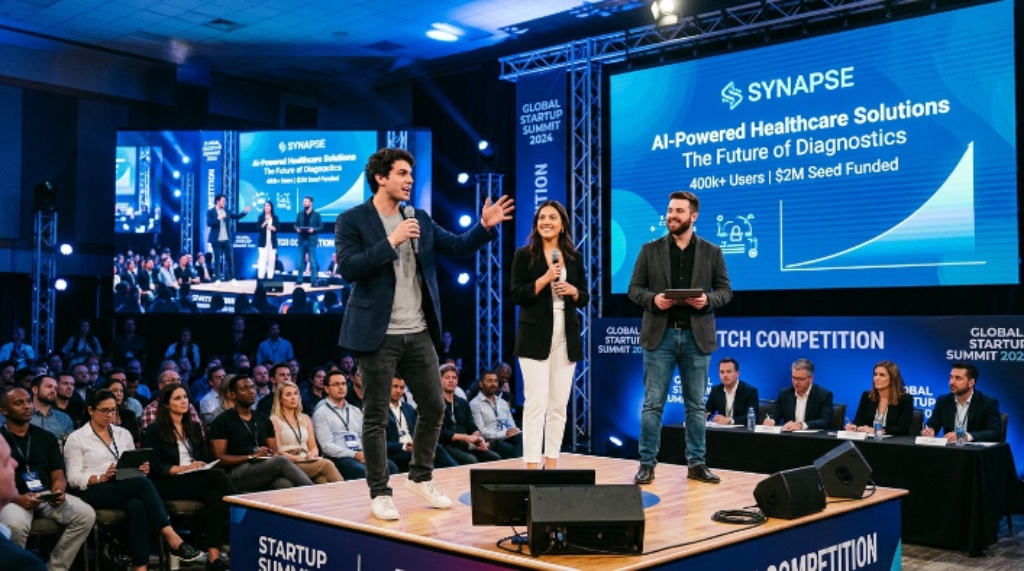
The speaker roster spans founders who have built category-defining companies, investors who write the checks that fund them, and operators who scale products after launch. Past editions have featured names like WordPress co-founder Matt Mullenweg, Phia co-founders Phoebe Gates and Sophia Kianni, and investor Elad Gil, and the 2026 lineup continues that tradition of mixing celebrity founders with working operators. Confirmed voices for this year include Alexa von Tobel of Inspired Capital, Chi-Hua Chien of Goodwater Capital, Ryan Meadows of Lovable, and Tomasz Tunguz of Theory Ventures, with additional names being added throughout the summer and fall.
Organizers have said the show will feature more than 250 speakers across the three days. That figure covers a wide mix of disciplines, including artificial intelligence, biotech, climate, fintech, robotics, and crypto. Because the list keeps growing right up until the event, checking the official speaker page shortly before travel is worthwhile for anyone hoping to plan around a specific session.
The Agenda and Stage Breakdown
More than 200 sessions are scheduled across six stages, which works out to roughly 11 sessions per stage each day. That density means talks run in short, focused blocks rather than long lectures, so attendees can move between stages and sample a variety of topics without losing much time. Formats include keynote interviews, panel debates, fireside chats, and hands-on workshops.
Several themes appear repeatedly throughout the three days. Artificial intelligence remains the dominant thread, with sessions covering everything from software applications to robotics, industrial automation, energy, and scientific research. Fintech and payments also get significant stage time, with discussions on stablecoins, embedded finance, and the future of money movement. Fundraising and company-building sessions round out the program, offering practical guidance for founders navigating scaling, hiring, and operations in a tighter capital environment.
A dedicated Builders Stage focuses squarely on operators and early-stage founders. Sessions there dig into topics such as how quickly startups now need to reach meaningful revenue, what separates standout companies during pitch competitions, and how founders maintain momentum in the months after a big funding round or product launch. This stage tends to draw a practical, how-to crowd rather than pure spectators.
Below is a simplified look at how the agenda tends to break down by focus area.
| Theme | What It Covers |
| Artificial Intelligence | Software, robotics, autonomous systems, industrial and scientific applications |
| Fintech and Payments | Stablecoins, embedded finance, digital payment infrastructure |
| Fundraising and Scaling | Company building, hiring, operations, founder strategy |
| Climate and Industrial Tech | Energy, manufacturing, physical-world infrastructure |
| Biotech and Health | Emerging health technologies and life sciences startups |
Startup Battlefield 200
The centerpiece of the event remains Startup Battlefield, the pitch competition that has run for more than fifteen years and helped launch companies including Dropbox, Trello, Cloudflare, and Discord long before they became household names. Each year, thousands of early-stage companies apply, and only 200 make the final cohort known as Startup Battlefield 200. Being selected is considered a meaningful credential on its own, since founders list it on pitch decks and press pages long after the event ends.
Selected companies exhibit for free across all three days, receive mentoring ahead of their pitch, and get direct exposure to press and investors. A smaller group advances to compete live on the main stage in front of a panel of venture capital judges and an audience of thousands. The winning company takes home a hundred thousand dollars in equity-free funding, along with a trophy and the kind of media coverage that can shift a company’s trajectory almost overnight.
This year’s cohort spans industries including artificial intelligence, biotechnology, climate tech, robotics, consumer products, and security. Sectors represented range from health diagnostics and neuroscience to logistics, audio technology, and fraud detection. Anyone attending who wants to spot the next breakout company should plan time to walk the Startup Battlefield floor, since many of these founders are showing their product publicly for the first time.
Networking and Side Events
Beyond the main stages, the event runs on relationships as much as content. The official event app allows attendees to schedule one-on-one and small group meetings in advance, which helps founders and investors avoid the chaos of trying to connect informally in a crowd of ten thousand people. Additionally, a wide range of side events pop up around San Francisco both before and during the week, hosted by venture firms, accelerators, and local tech communities. These gatherings often provide a more relaxed setting for deeper conversations than the main show floor allows.
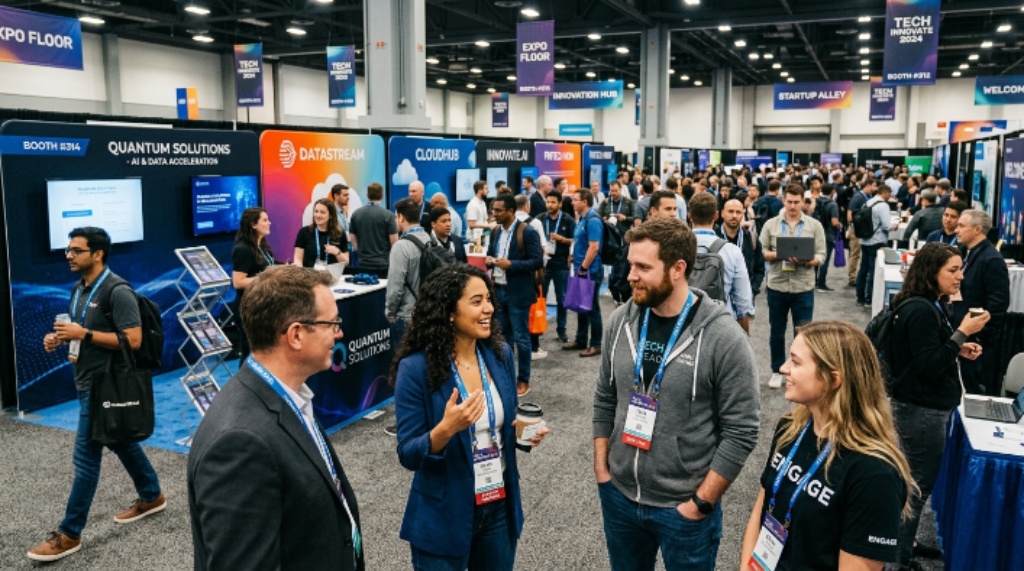
For founders specifically, the exhibit floor doubles as a networking hub. More than 300 startups typically showcase their products there, which gives visiting investors and corporate scouts a concentrated view of what is emerging across categories. Therefore, arriving with a clear sense of which booths and sessions matter most helps attendees make the best use of limited time.
Tips for First-Time Attendees
First-time visitors often underestimate how much ground the venue covers and how quickly sessions fill up. Planning ahead makes the experience far smoother. Consider the following before arrival.
- Download the event app early and build a personal schedule before day one begins.
- Book hotels near the venue as soon as possible, since nearby rooms sell out weeks in advance.
- Wear comfortable shoes, since the venue spans multiple levels and stages are spread apart.
- Bring extra business cards or set up a digital contact-sharing method, since networking moves fast.
- Prioritize two or three must-see sessions each day rather than trying to catch everything.
- Set aside dedicated time to walk the Startup Battlefield floor, since that lineup changes constantly.
Following even a few of these steps can turn an overwhelming three days into a genuinely productive one.
Conclusion
TechCrunch Disrupt 2026 brings founders, investors, and operators together for three days of dense programming, high-stakes pitching, and real networking. The event runs October 13 through 15 at Moscone West in San Francisco, with more than 200 sessions across six stages and over 250 speakers covering artificial intelligence, fintech, climate, biotech, and beyond. Ticket prices rise in stages, so early registration tends to offer the best value, while passes are tailored for founders, investors, and teams alike. Startup Battlefield 200 remains the signature draw, giving 200 early-stage companies a shot at funding, mentorship, and global visibility, with one winner walking away with a hundred thousand dollars in equity-free prize money. Whether the goal is raising capital, scouting new technology, or simply staying current on where the industry is headed, this event offers a concentrated, high-value way to spend three days in San Francisco.
Frequently Asked Questions
When does the event take place in 2026?
It runs from October 13 through October 15, 2026, at Moscone West in San Francisco.
How much do tickets cost?
Pricing varies by pass type and registration date. Early registrants typically save several hundred dollars compared with standard or last-minute pricing, and group passes offer additional discounts for teams.
What is Startup Battlefield 200?
It is the flagship pitch competition featuring 200 handpicked early-stage startups. Finalists compete on the main stage for a hundred thousand dollars in equity-free funding.
Who speaks at the event?
The lineup includes founders, investors, and operators from across the tech industry. Past speakers have included well-known founders and venture capitalists, and the 2026 roster includes more than 250 confirmed voices.
Is the event worth attending for early-stage founders?
Many founders find it valuable for fundraising exposure, mentorship, and networking, particularly if they secure a Startup Battlefield 200 slot or use the event app to schedule investor meetings in advance.